Roof replacement in El Monte priced against a written scope - every structure on the parcel counted, and the converted-garage question answered before anyone quotes a covering.
A single figure on an El Monte quote quietly decides what it covers, and on most parcels here the honest answer is four roofs: the house, a detached garage, a rear addition and a patio cover. Each is a different age, often a different covering, and increasingly the garage has somebody living under it. Ask for it itemized.
El Monte is the oldest settlement in the San Gabriel Valley and it shows on the roofs. A single street can carry a pre-war house, a post-war bungalow, a 1970s addition and a recent infill build -- four different decks, four different framing standards and four different original coverings.


Those are estimated Los Angeles County figures for a house. The reason two El Monte quotes can differ by thousands on the same address is usually simpler than anything about the roof: they are not counting the same structures. Ask for the price itemized by structure and the comparison becomes possible. Two things move an El Monte quote more than the roof does: how many structures are being counted, and whether there is anywhere to work. A house built out to the line with no side yard costs more to strip than the same roof on an open lot, and a quote that does not say which structures it covers cannot be compared with another one.
A simple roof shape, somewhere to stage material, a plywood deck that turns out to be sound, and doing every structure on one mobilization instead of three.
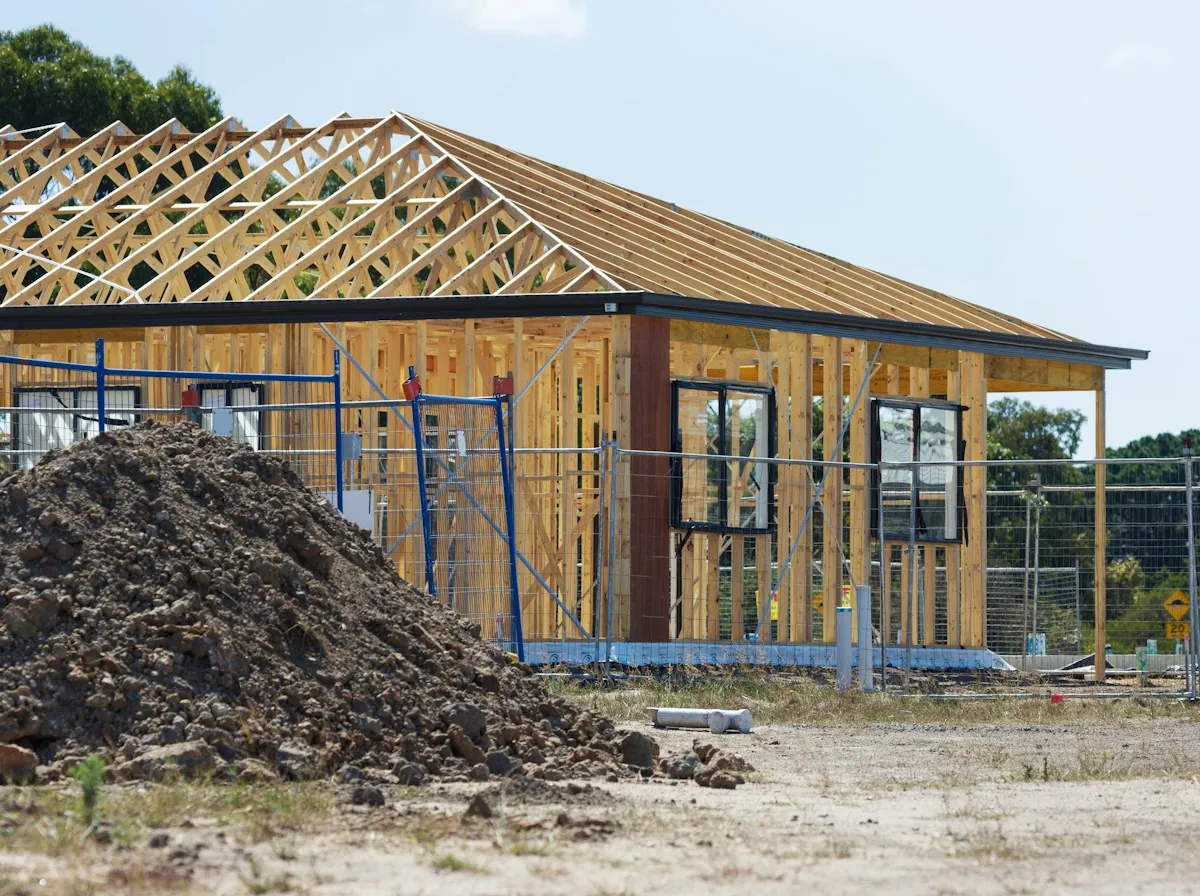
Skip sheathing that has to be overlaid before anything can be nailed to it, a lot built out to its boundaries with nowhere to work, a second story, or tile instead of composition.
How sheathing replacement is priced. It should be a rate per sheet in the written scope, because nobody knows how much has softened until the covering is off -- and a quote that states a lump figure is guessing in one direction or the other.
What this often turns out to be instead, and the cost of each.
No replacement parking is required to convert a garage here, and a valid application gets a 60-day review -- which in the valley's densest city has produced a lot of conversions.
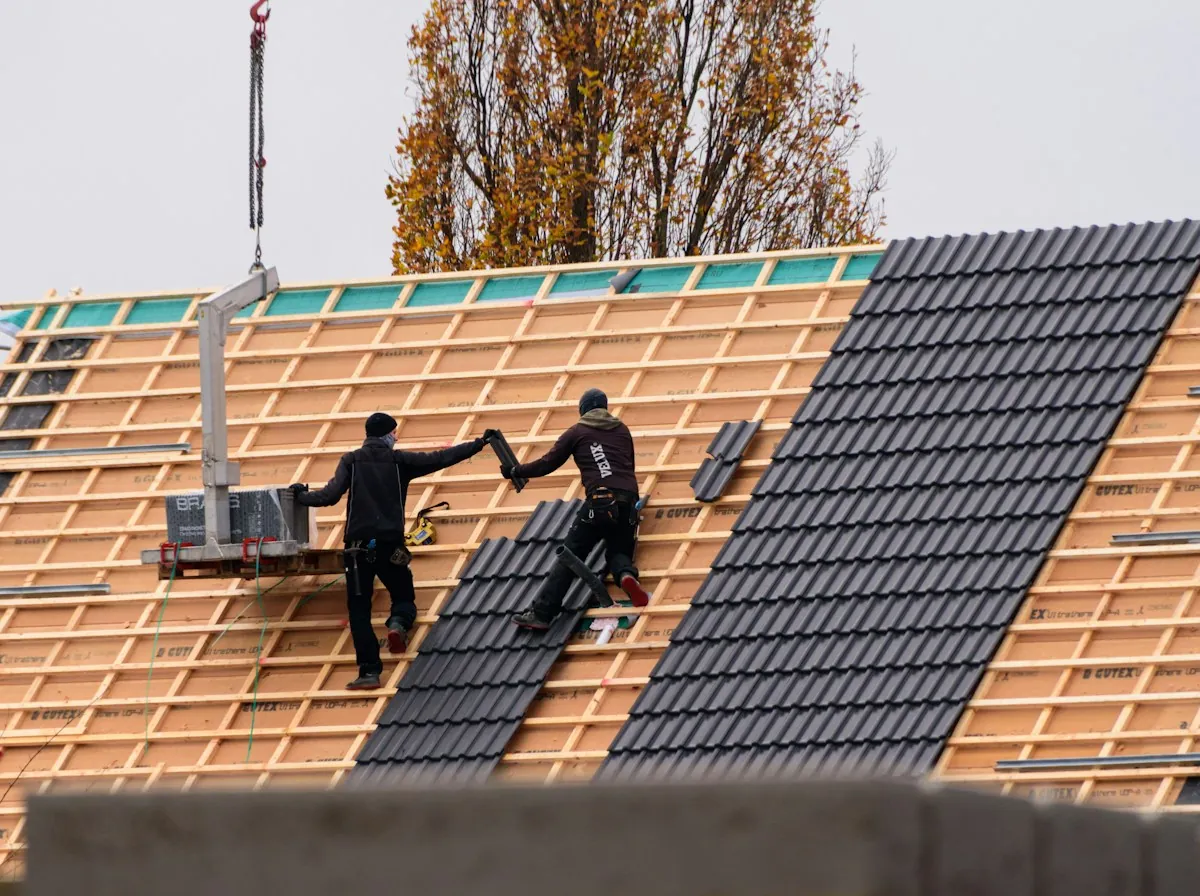
The constraint on a tile relay here is space, not skill.
What is under the shingle decides the price, and in the oldest settlement in the valley that could be almost anything.
There is more low slope per property here than in most of the valley, and the reason is the added-on structures.
Separate structures have separate 50% tests, and on an El Monte parcel that is unusually useful because so many have three or four.
On most parcels here there is more than one answer, and the expensive mistake is replacing the wrong one.
House, detached garage, rear addition, patio cover. Four roofs of four different ages, and a single figure on a quote quietly decides which of them it covers. Ask for it itemized and two quotes become comparable for the first time.
Look away from the leak. If the covering across the rest of the slope still has granules, still lies flat and is not brittle, that roof has life in it. A failed flashing, a split upstand or a slipped course is a repair costing hundreds -- and each is routinely presented as proof the whole roof is done.
A tile roof quoted at $30,000 to $60,000 for replacement is very often an $8,000 to $22,000 lift and relay, because the tile is fine and only the felt beneath it has failed.
In a converted garage, damp that is worse in dry weather is condensation, not a leak -- a room built under a roof that was never insulated or ventilated. Replacing that roof without fixing that is money spent on the wrong problem.
Free inspection of every structure on the parcel, then a written quote. No obligation, no curbside numbers.
Tell us which structure is affected - the house, the garage, an addition. On a dense El Monte parcel that answer changes the whole approach before anyone travels.
Roof and attic together, and every roof on the parcel identified. A single figure that quietly decides what it includes is the commonest way an El Monte quote misleads.
On a converted garage this is the whole question. Damp that is worse in dry weather is an assembly problem, not a covering problem, and the fix is a fraction of the price.
Deck type named, layer count stated, sheathing priced per sheet. The permit through the right city - there are two with almost the same name here.
There are enough people working this valley with a clipboard and no license number that the checks are worth making on anybody.
Roofing is licensed work in California under classification C-39, and the CSLB register is public. Check it before anyone goes up, and check ours.
The single most useful question in this city, and the one that explains most of the spread between quotes on the same property. A price for 'the roof' on a parcel with four of them is not a price yet.
El Monte and South El Monte are separate incorporated cities with separate building departments. An application filed with the wrong one is a week gone, and it happens constantly because the names are so close.
A tear-off versus an overlay, a sheathing allowance versus a lump guess, and an aged-SRI product versus a cheaper one each move the price by thousands. A lower quote is sometimes a lesser roof rather than a better deal.
On a parcel carrying four roofs, a price produced at the curb has not seen three of them. Insist that the roof and the roof space are both looked at before a figure is written down -- ours included -- and treat a doorstep number as an opening position rather than a quote.
California ADU law made garage conversion unusually easy here - no replacement parking is required when you convert, and a valid application gets a 60-day review. In one of the San Gabriel Valley's densest cities that has produced a great many conversions, and a great many roofs now doing work they were never designed for.
A garage roof typically has no insulation and minimal ventilation, because neither mattered over a concrete slab and a car. Put a heated, occupied room underneath and warm moist air rises into a cold deck cavity that cannot breathe. The result is condensation on the underside of the sheathing, and it behaves exactly like a leak - stains, damp, eventually rot - except that it appears without rain.
So the diagnostic is simple and it saves people real money. If the damp is worse in winter, worse overnight, or happens in dry weather, the covering above is probably fine and the assembly below is wrong. Replacing the roof will not fix it. Insulation, a proper vapor approach and genuine ventilation will - and that is a far smaller job than the one usually quoted.

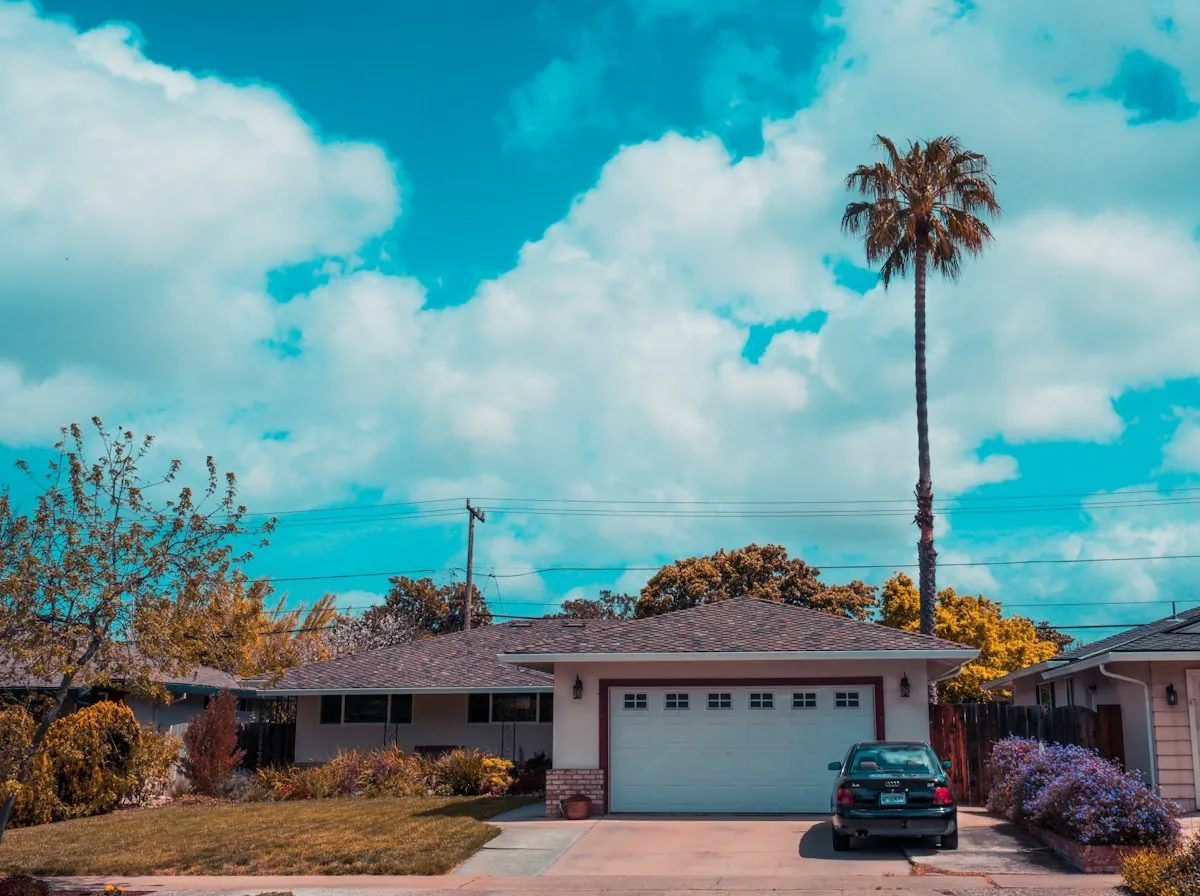
The oldest settlement in the San Gabriel Valley and the first in Southern California founded by citizens of the United States, settled around 1849-1850 by arrivals from Texas, Arkansas and Missouri at the end of the Santa Fe Trail. One of the valley's most densely populated cities, with housing from pre-war and post-war bungalows through to recent infill, on small lots built close to their boundaries.
Two things recur on nearly every parcel. There is almost never only one roof -- a house, a detached garage, a rear addition and a patio cover is the normal count -- and an increasing share of those garages now have somebody living under them, which changes the roof from a rain question into a ventilation one.
El Monte is the oldest settlement in the San Gabriel Valley, which means its housing spans more building eras than almost anywhere else in the region.

El Monte and the cities around it - including South El Monte, which is a separate city with its own building department.
A different city, with a different department.
Room to work, which makes a tile relay cheaper.
Same stock, more space, its own conversion rules.
Mature canopy. Debris in every valley.
Old stock and skip sheathing. Check the deck.
Hillside split levels and short low-slope links.
Small apartment blocks and the logistics they bring.
What people ask before they book, answered here.
Only where it has actually softened, and it is priced as a rate per sheet in the written scope rather than a lump guess. Nobody can tell you how much needs replacing before the old covering is off, and a quote that claims to is guessing in one direction or the other.
Only if you are on one layer and the deck is solid sheeting. Two coverings is the practical limit, and on spaced skip sheathing there is nothing to nail a second layer into between the boards -- so it ends up with loose courses in its first windy season.
A house in Los Angeles County is estimated at $10,000 to $25,000 for most jobs. Composition runs $7 to $11 per square foot locally against about $4 nationally, which is why online calculators read low. The inspection is free and the quote is written, because pitch, access, covering and what the old roof was hiding all move it.
In this city the commonest reason is that they are not counting the same structures -- one included the detached garage and the addition, the other priced the house. After that it is a tear-off versus an overlay, and how sheathing replacement is priced. Ask both for the price itemized by structure and the difference usually explains itself.
Usually yes, and not for the reason people expect. A garage roof has no insulation and minimal ventilation because neither mattered over a car. Put a bedroom under it and you get condensation that behaves exactly like a leak. Doing it before the ceiling is lined is much cheaper than after.
Free inspection, a written quote, and every structure on the parcel counted rather than averaged.