ADU Roof Replacement in Montebello from $3,000. A garage roof was built to shelter a car. A bedroom is a different job. Free inspection and a written quote.
On a multi-family parcel an accessory conversion sits alongside existing tenants, which makes notice and access part of the job rather than a courtesy. It also raises a question worth asking early: whether the work is better done at the same time as the main building's roof, because mobilizing twice is the larger cost.
California ADU law has made garage conversion unusually straightforward here: no replacement parking is required when you convert, and a valid application gets a 60-day review. In one of the valley's densest cities that has produced a lot of conversions -- and a lot of roofs now doing work they were never designed for.


Be clear about where that range comes from: there is no published market figure for an ADU roof, because nobody measures it as a category. It is arithmetic. A typical detached garage is 400 to 500 square feet, composition runs $7 to $11 per square foot in Los Angeles County, and insulation and ventilation the original roof never had is the rest. We would rather show you the sum than quote you an average that does not exist. On a small apartment block the roof is the easy part. Resident notice, parking displacement, staging and a sequence that never leaves an occupied unit open overnight are what decide the cost, and a quote that mentions none of them has not thought about the building.
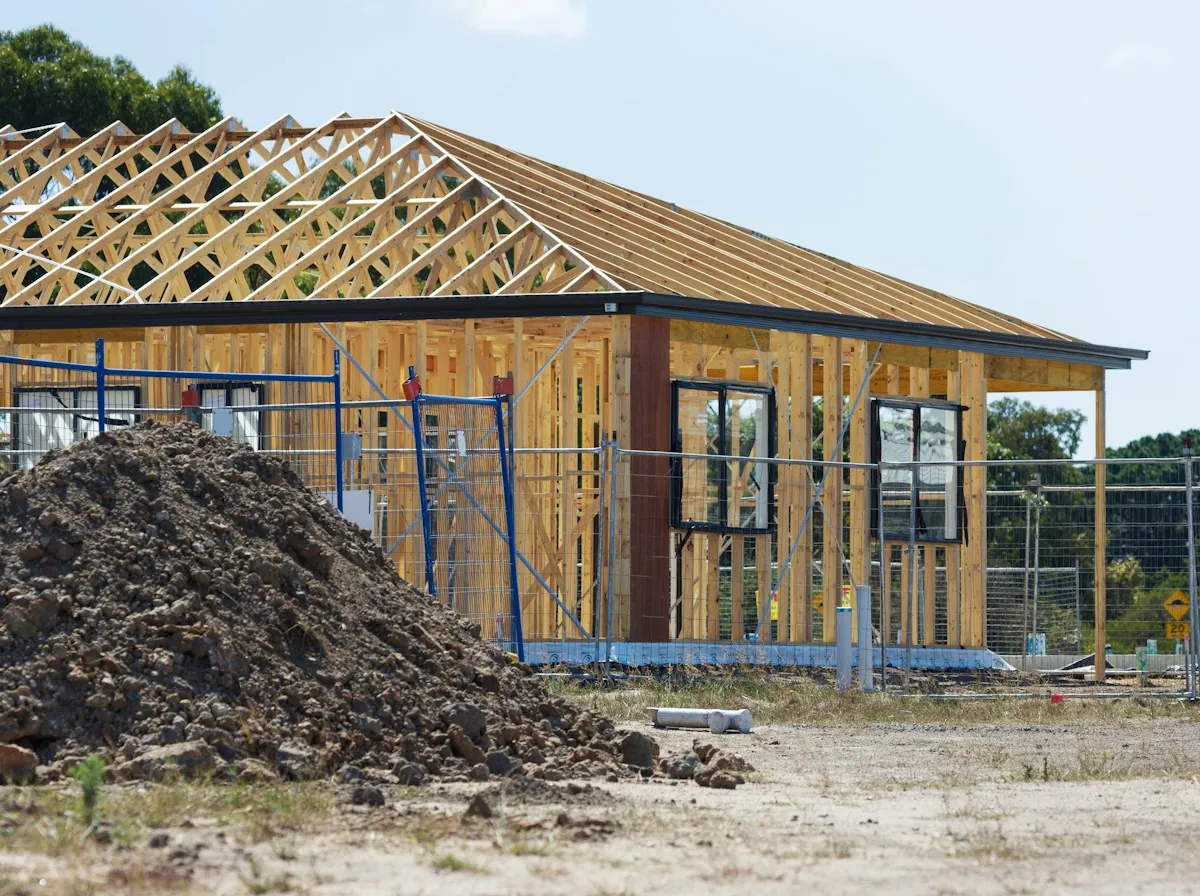
A garage roof was built over a car. No insulation, minimal ventilation, and frequently no underlayment worth the name, because none of it mattered. Put a bedroom underneath and all three matter immediately.
A converted garage that is already lined, so the work has to be done from above. Ventilation added to a roof with no eave to vent into. And an older garage where the deck is spaced boards rather than sheeting.
Doing the roof before the conversion is lined, and doing it at the same time as the house if the house is anywhere near due. Mobilization is the fixed cost -- the roof is the variable one.
The multi-family share is what makes Montebello different from the rest of this list. On a two-to-eight unit building the constraint is never the covering -- it is staging, resident notice, parking displacement and a sequence that never leaves an occupied unit under an open roof overnight.
Worth knowing before you start ringing round, and worth building into anything that has a date attached to it.
Roofs here fail quietly through a long dry summer -- heat and ultraviolet working on the covering, granules washing into the gutter, laps loosening -- and then leak all at once in the first serious storm of the winter. Every roofer in the San Gabriel Valley takes those calls on the same three nights, which is why a replacement booked in September costs less and starts sooner than the identical job booked in February.
The typical Montebello replacement is as likely to be a small apartment block as a house, and on those the roof is the easy part.
On a multi-unit building a relay has to be staged rather than stripped, because there is nowhere to put the tile and no acceptable way to leave occupied units under an open roof.
A lot of Montebello multi-family is two systems on one building: a shingled street-facing pitch and low slope behind it where nobody looks.
Low slope over small apartment blocks is the core job here, and the pattern is consistent: ponding at the low corner, a scupper blocked long enough to leave a tide mark, and a parapet coping that has opened up.
On a multi-building site partial means by building rather than by slope: worst roof first, the rest scheduled.
Oldest settlement in the valley. Rarely one roof.
A different city, with a different department.
Room to work, which makes a tile relay cheaper.
Same stock, more space, its own conversion rules.
Mature canopy. Debris in every valley.
Old stock and skip sheathing. Check the deck.
Hillside split levels and short low-slope links.
The questions this job turns on, answered up front.
That symptom is the opposite of a leak, and it is the most useful thing you can tell us. Warm moist air from a new room hits a cold uninsulated deck and condenses. It shows up in dry cold weather because that is when the deck is coldest. The fix is insulation and ventilation, not sealant.
Not always required, but it is much cheaper before the ceiling is lined, because everything can be done from below. Once it is lined the same work is a roof job from above. If the conversion is going in anyway, the roofing decision belongs at the start of the 60-day review, not after it.
No. The inspection is free, it covers every structure on the parcel rather than the one you rang about, the written quote is free, and neither carries an obligation. What we will not do is give you a number at the curb without going up.
A house in Los Angeles County is estimated at $10,000 to $25,000 for most jobs. Composition runs $7 to $11 per square foot locally against about $4 nationally, which is why online calculators read low. The inspection is free and the quote is written, because pitch, access, covering and what the old roof was hiding all move it.
You can, and on a parcel with several structures it is often the right answer, because each structure has its own 50% test. What nobody volunteers is that the fixed costs -- permit, mobilization, waste, a crew day -- do not shrink. Phasing one house roof over two years usually costs more than doing it once.
Free inspection -- house, garage, addition and patio cover, not just the one. A written quote against a written scope, itemized by structure.