Tile Roof Replacement in Rosemead from $8,000. The tile is almost always reusable. What has failed is underneath it, and on a tight lot the cost is in the handling. Free inspection and a written quote.
More generous lots make staging straightforward, so the relay here runs the way it is supposed to. The underlayment question is identical to El Monte's -- sound tile over failed felt is the commonest finding -- but without the sectional working that density forces next door.
Concrete tile outlives the underlayment beneath it by decades. A tile field that looks perfectly sound from the street can be sitting on felt that has gone brittle and torn, which is why these roofs leak with no broken tile anywhere near the stain.


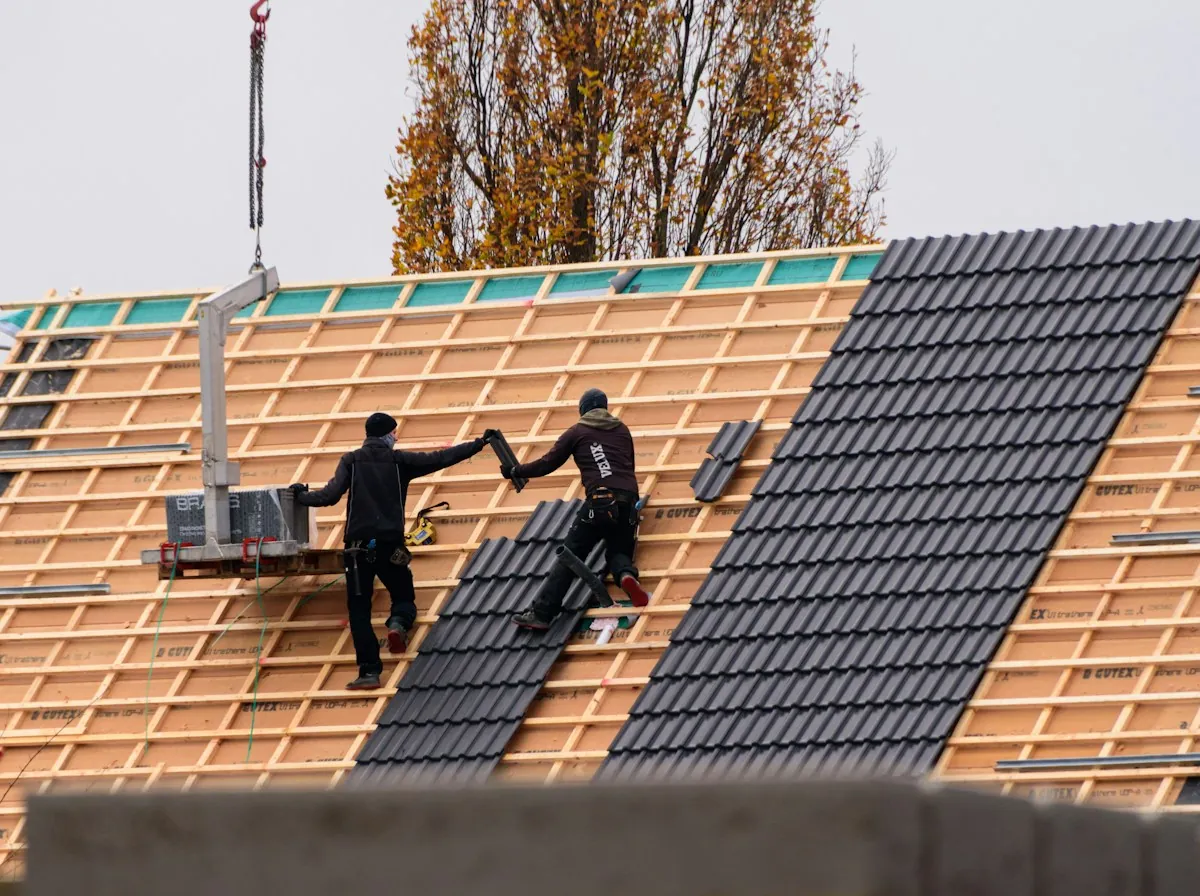
This is the lane where most people are quoted the wrong job. Buying new tile is $15 to $25 per square foot in Los Angeles, so $30,000 to $60,000 for a full replacement. A lift and relay -- your tile off, new underlayment down, the same tile back -- is $8,000 to $22,000, because the tile is not bought twice. On most valley roofs the tile has decades left and only the felt beneath it has gone. Similar housing to El Monte on generally more generous lots, so labor sits at the lower end of these ranges. The permit is City of Rosemead, and a neighbor's experience is a reasonable guide here in a way it is not four miles east, because the stock is consistent.
One to three dollars per square foot. Everything else is the labor of lifting, stacking and relaying tile without breaking it -- which is why staging space shows up in the price.
Nowhere to stack the tile, so the roof gets worked in sections instead of stripped in one pass. A discontinued profile, where every breakage is a tile that cannot be replaced. A sloping lot, where every piece is carried up a gradient.
Widespread cracking, spalling concrete, or a profile so brittle that half of it will not survive being lifted. We will tell you when a relay is not viable -- but that is the minority, and it should be shown to you, not asserted.
Similar stock and similar age to El Monte, so similar failures -- but the lots are generally a little more generous, which changes the logistics rather than the roofing. Permits are City of Rosemead, and the conversion rules differ in detail from El Monte's even though the state law underneath them is the same.
On most parcels here there is more than one answer, and the expensive mistake is replacing the wrong one.
House, detached garage, rear addition, patio cover. Four roofs of four different ages, and a single figure on a quote quietly decides which of them it covers. Ask for it itemized and two quotes become comparable for the first time.
A tile roof quoted at $30,000 to $60,000 for replacement is very often an $8,000 to $22,000 lift and relay, because the tile is fine and only the felt beneath it has failed.
In a converted garage, damp that is worse in dry weather is condensation, not a leak -- a room built under a roof that was never insulated or ventilated. Replacing that roof without fixing that is money spent on the wrong problem.
Similar stock and similar age to El Monte, but on generally more generous lots, so the logistics are easier and the roofing is the same.
Rosemead runs its own conversion process under the same state law, so the timelines and the paperwork differ in detail from El Monte's.
Post-war Rosemead housing is consistent enough that a neighbor's experience is a reasonable guide, which is not true four miles east where the building eras are mixed.
Same pattern as El Monte -- additions, garages and patio covers -- with slightly more room to rebuild fall properly rather than re-covering a marginal slope.
The argument against phasing in Rosemead is the same as everywhere and worth stating plainly: mobilization costs much the same whether you do one structure or three.
Oldest settlement in the valley. Rarely one roof.
A different city, with a different department.
Room to work, which makes a tile relay cheaper.
Mature canopy. Debris in every valley.
Old stock and skip sheathing. Check the deck.
Hillside split levels and short low-slope links.
Small apartment blocks and the logistics they bring.
The questions this job turns on, answered up front.
It may be the right price for the wrong job. Full replacement in Los Angeles is $15 to $25 per square foot, so $30,000 to $60,000 is normal for one. But most valley tile roofs need a lift and relay instead -- $8,000 to $22,000 -- because your existing tile goes back down and only the underlayment is new.
Most concrete profiles from the 1970s onward do, with an allowance for breakage that we state up front rather than adding later. What decides it is the profile and the handling: a tight lot means working in sections and more movement per tile, and a sloping lot means carrying every piece up a gradient twice.
Usually yes, and not for the reason people expect. A garage roof has no insulation and minimal ventilation because neither mattered over a car. Put a bedroom under it and you get condensation that behaves exactly like a leak. Doing it before the ceiling is lined is much cheaper than after.
Re-roofing is permitted work and we pull it. Which city matters more here than almost anywhere: El Monte and South El Monte are separate incorporated cities with separate building departments, and an application on the wrong desk costs a week. The inspection that comes with the permit is your independent check that the specification you paid for is what went on.
Two to four days per structure once it starts: tear-off and dry-in on day one, covering after. Tile takes longer than composition, and a sectional relay on a tight lot longer again. Weather moves it, and we will not dry-in a roof we cannot finish.
Free inspection -- house, garage, addition and patio cover, not just the one. A written quote against a written scope, itemized by structure.